Driver Monitoring
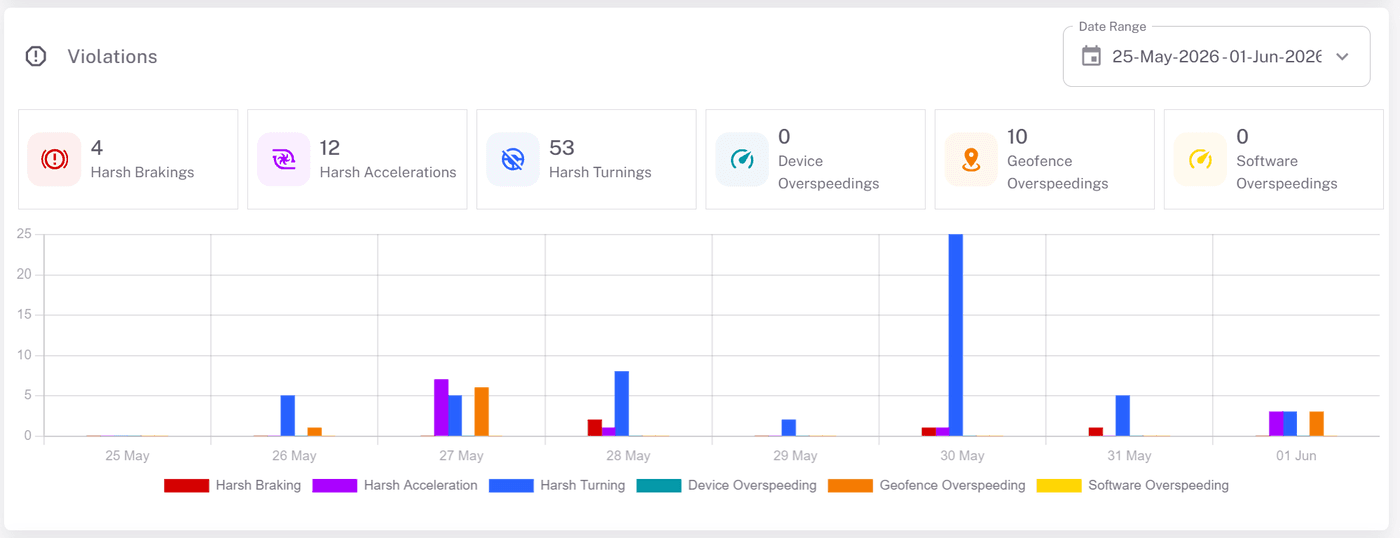
Fleetbooks uses G-force sensors in the tracking device to detect harsh driving events — hard braking, rapid acceleration, sharp cornering, and swerving — and logs each one with a GPS location, timestamp, and severity rating.
Key capabilities
What Driver Monitoring does for your fleet.
Automatic Event Detection
G-force thresholds for braking, acceleration, cornering, and swerving are monitored continuously. No manual input is needed from the driver — events are captured automatically when thresholds are exceeded.
GPS-Pinned Event Log
Every harsh driving event is stored with the exact location, speed at the time, heading, and a severity score. Managers can pull up any event on the map to review the context.
Driver Trend Tracking
View event frequency per driver over days, weeks, and months. Spot drivers with recurring harsh events and track whether coaching interventions are making a measurable difference.
Who uses it
Driver Monitoring is used across industries wherever fleet visibility and control matter.
Insurance Premium Reduction
Build a documented record of safe fleet driving behavior to present to insurers during renewal negotiations.
Targeted Driver Coaching
Pull up a specific driver's event log and walk through individual incidents in a one-on-one review, backed by GPS location and vehicle data.
New Driver Probation Monitoring
Apply closer scrutiny to new hires in their first 90 days. Automated weekly event summaries flag anyone whose driving behavior needs early attention.
See Driver Monitoring in action
Book a 30-minute demo and we'll walk you through your specific use case.